

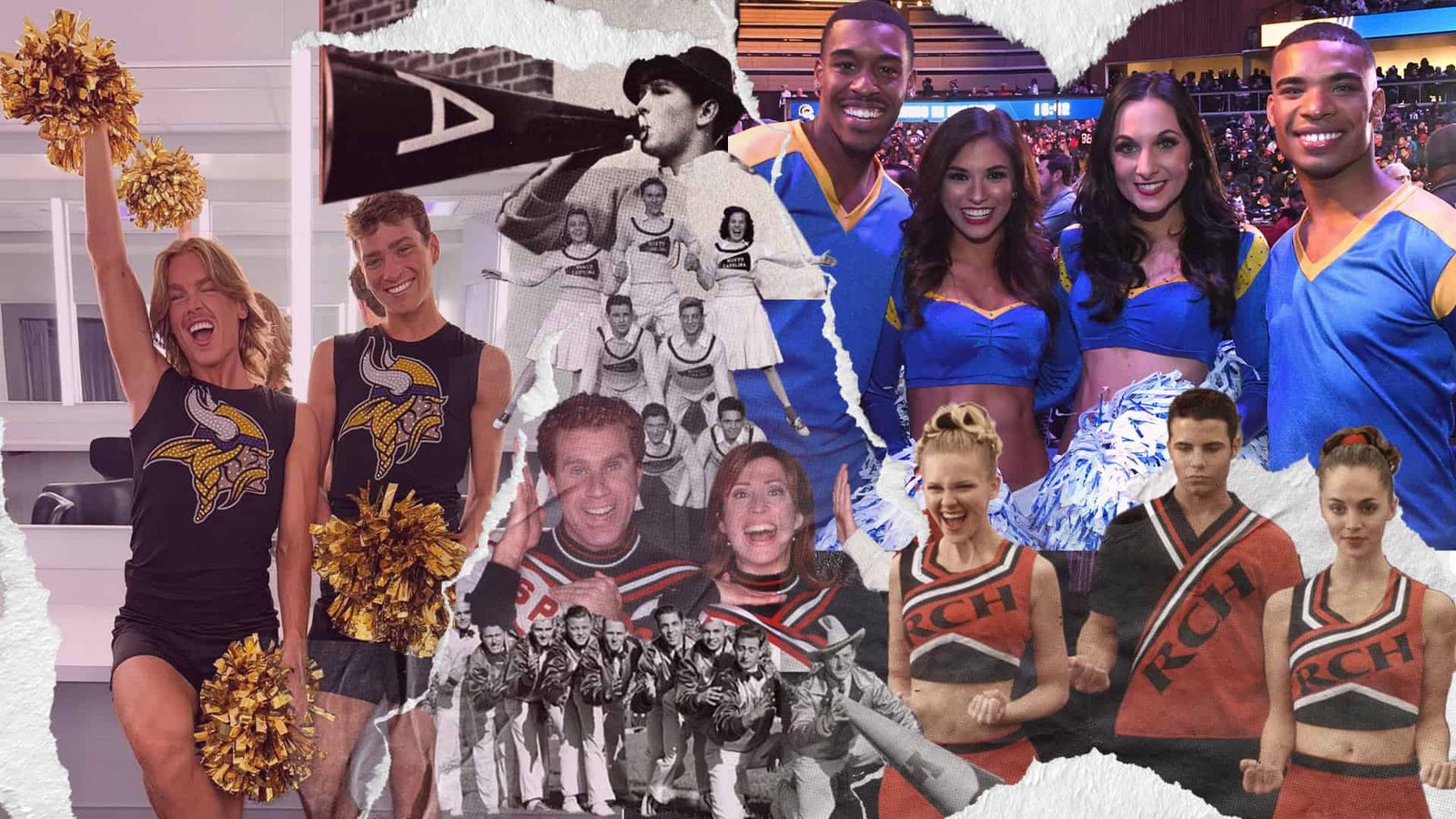

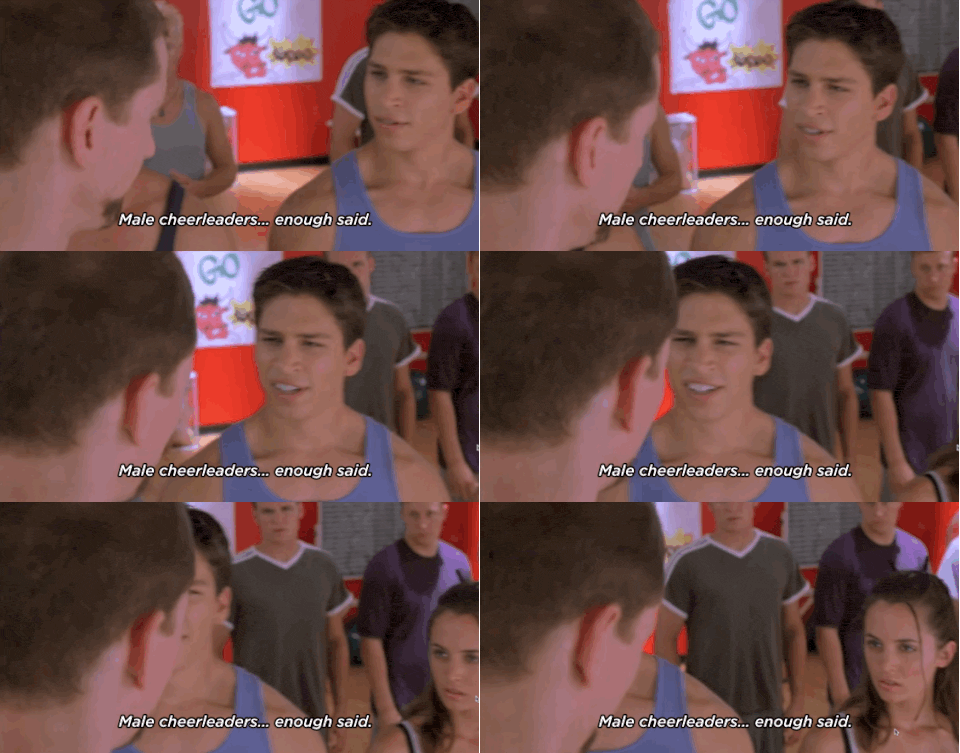
Wait, so no one saw Bring It On?
Men have been cheerleaders since the very beginning of the concept. Why are y’all gagging now?
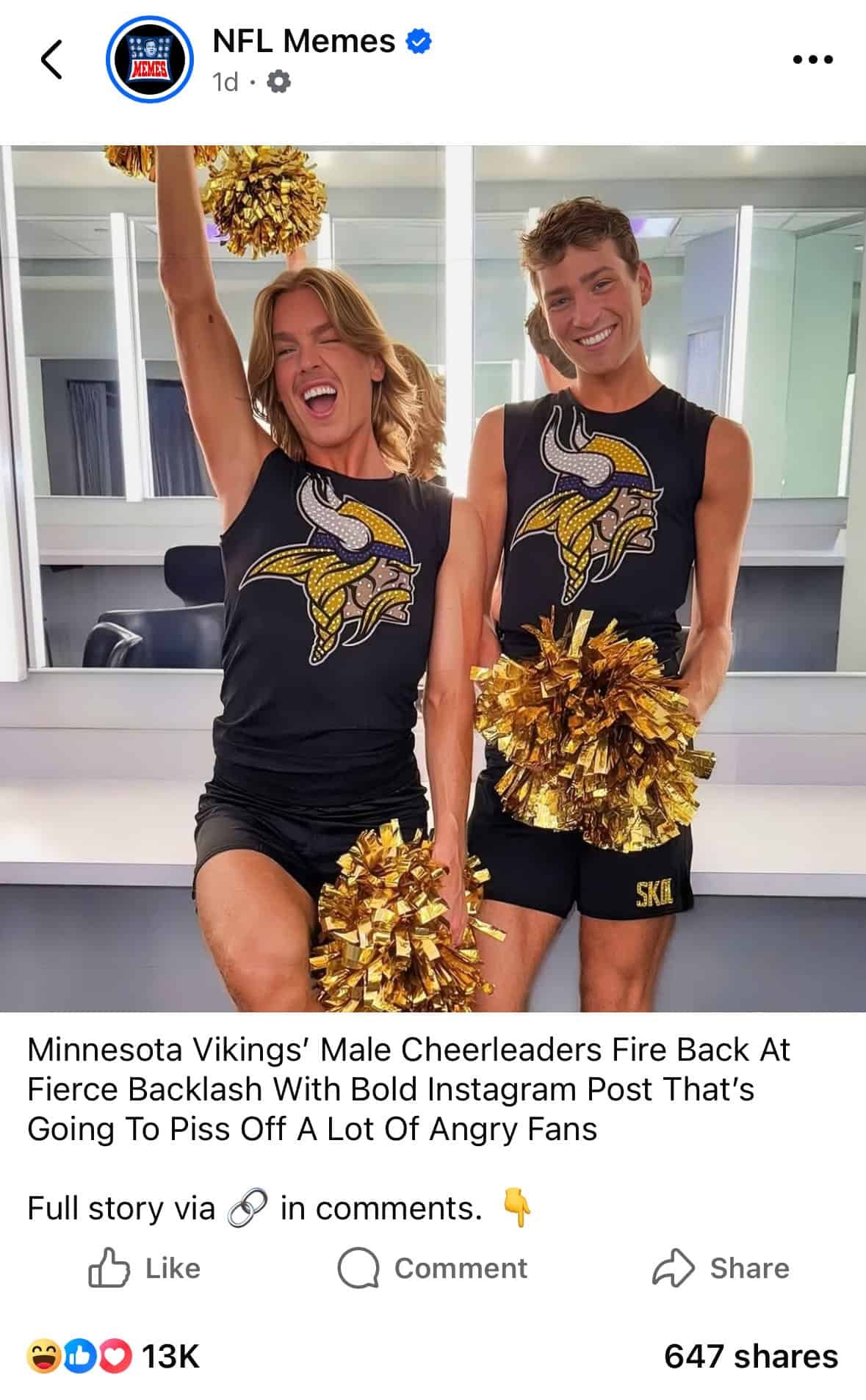

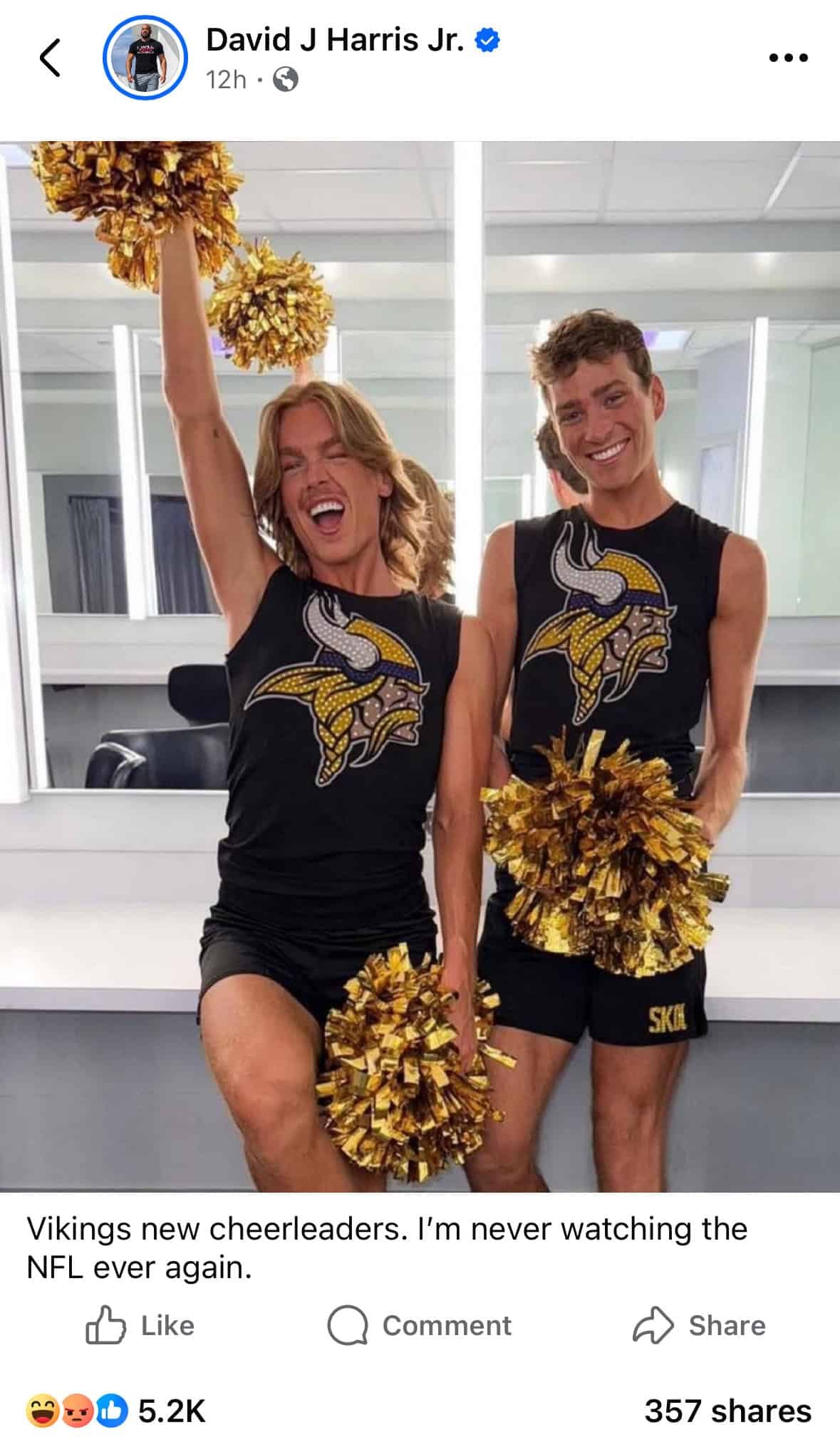
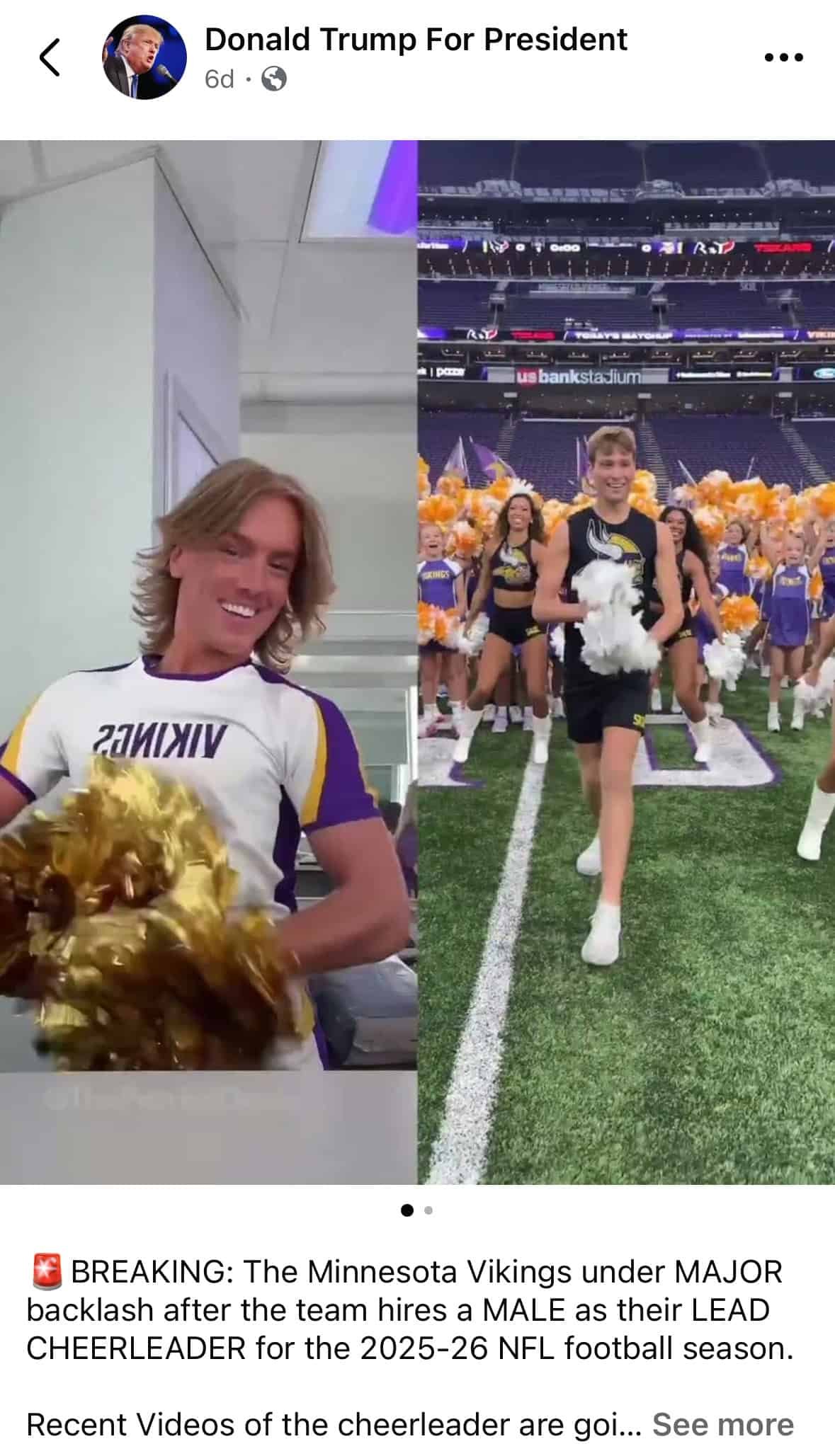
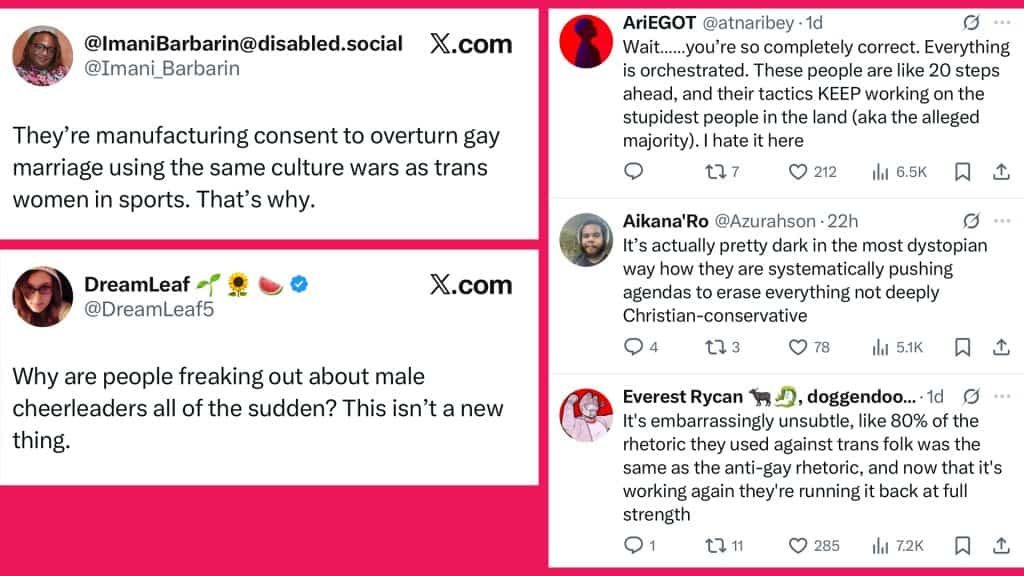
The Minnesota Vikings’ addition of male cheerleaders Blaize Shiek and Louie Conn for the 2025 season has exploded into another bizarre culture war. Over the last week, a wave of negative headlines popped up on Facebook pages built to monetize conservative rage clicks. That outrage quickly climbed the food chain until U.S. Senator Tommy Tuberville decided to chime in.
“What the hell are you doing?” Tuberville barked at the NFL. “If you’re going to be woke, and if you’re going to try to take the men out of men’s sports, which is what they’re doing… you’re going to have a huge problem.”
Yes, you read that right: male cheerleaders are apparently “taking the men out of men’s sports.” How does that work when cheerleading was invented by men for men.
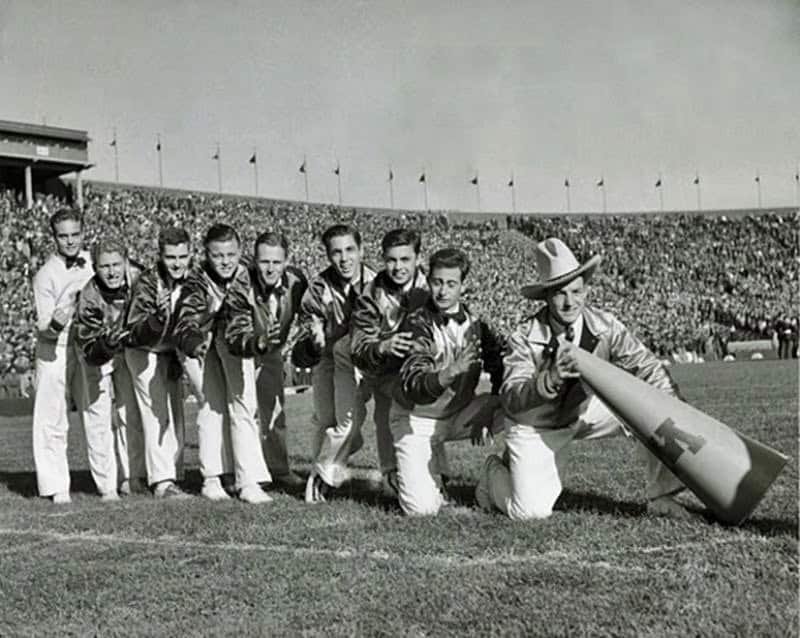
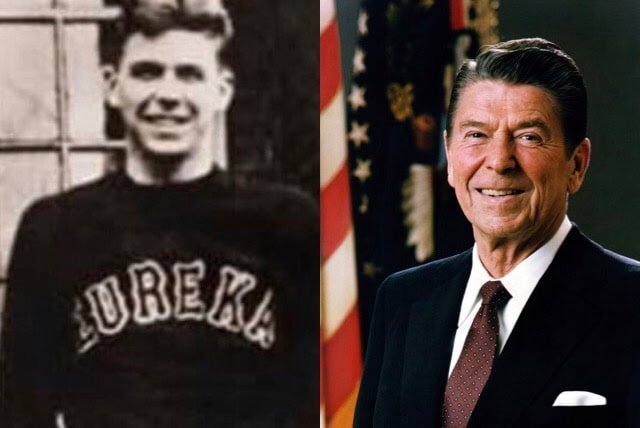
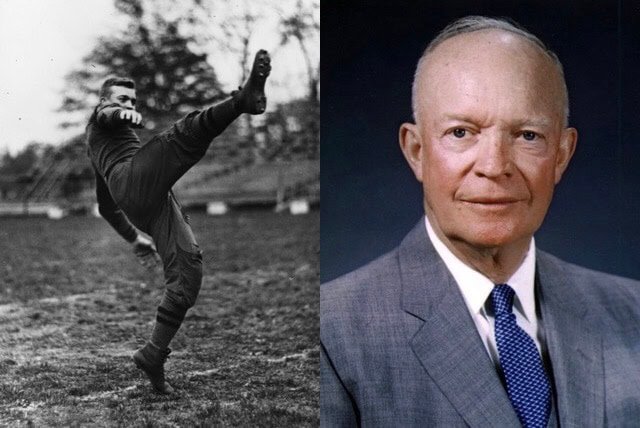
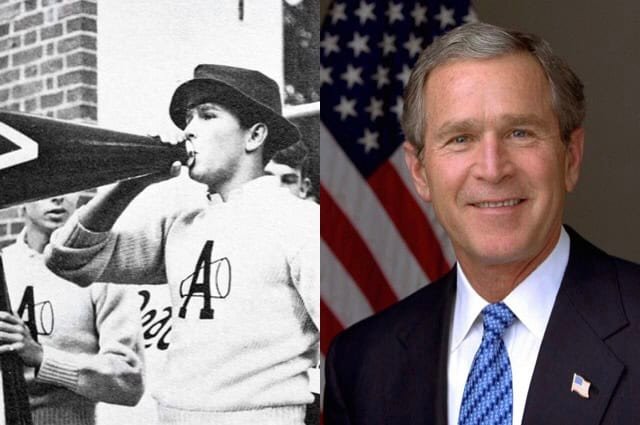
Rah, Rah, Rah! Ski-u-mah! In 1898, Johnny Campbell rallied a crowd at the University of Minnesota, megaphone in hand, and history was made. For decades, cheerleaders were the original hype men. It was considered a prestige extracurricular at Ivy League schoolsa pipeline to politics, military service, and public leadership. Franklin D. Roosevelt was a cheerleader at Harvard. Dwight Eisenhower led chants at West Point, even THE REPUBLICAN Ronald Reagan carried as a cheerleader at Eureka College.
It wasn’t until after World War II that women filled the cheer ranks, and the NFL doubled down on that imagery in 1972 with the debut of the Dallas Cowboys Cheerleaders: high boots, big hair, pure sex appeal. Male cheerleaders didn’t vanish, but they became the bases, the lifters, the muscle behind the pyramids. As stunts and tumbling grew more advanced, so did the demand for male athletes.
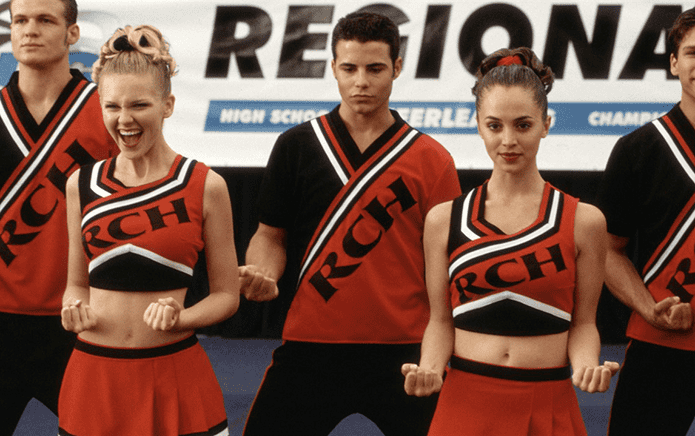


By the 1980s and ’90s, competitive cheerleading made them essential. The quintessential cheerleading film Bring It On (2000) brought the idea of male cheerleaders, both gay and straight into mainstream pop culture, while Netflix’s Cheer (2020) cemented it, turning athletes like La’Darius Marshall into household names and spotlighting the grit, drama, and pure athleticism behind the pom-poms.
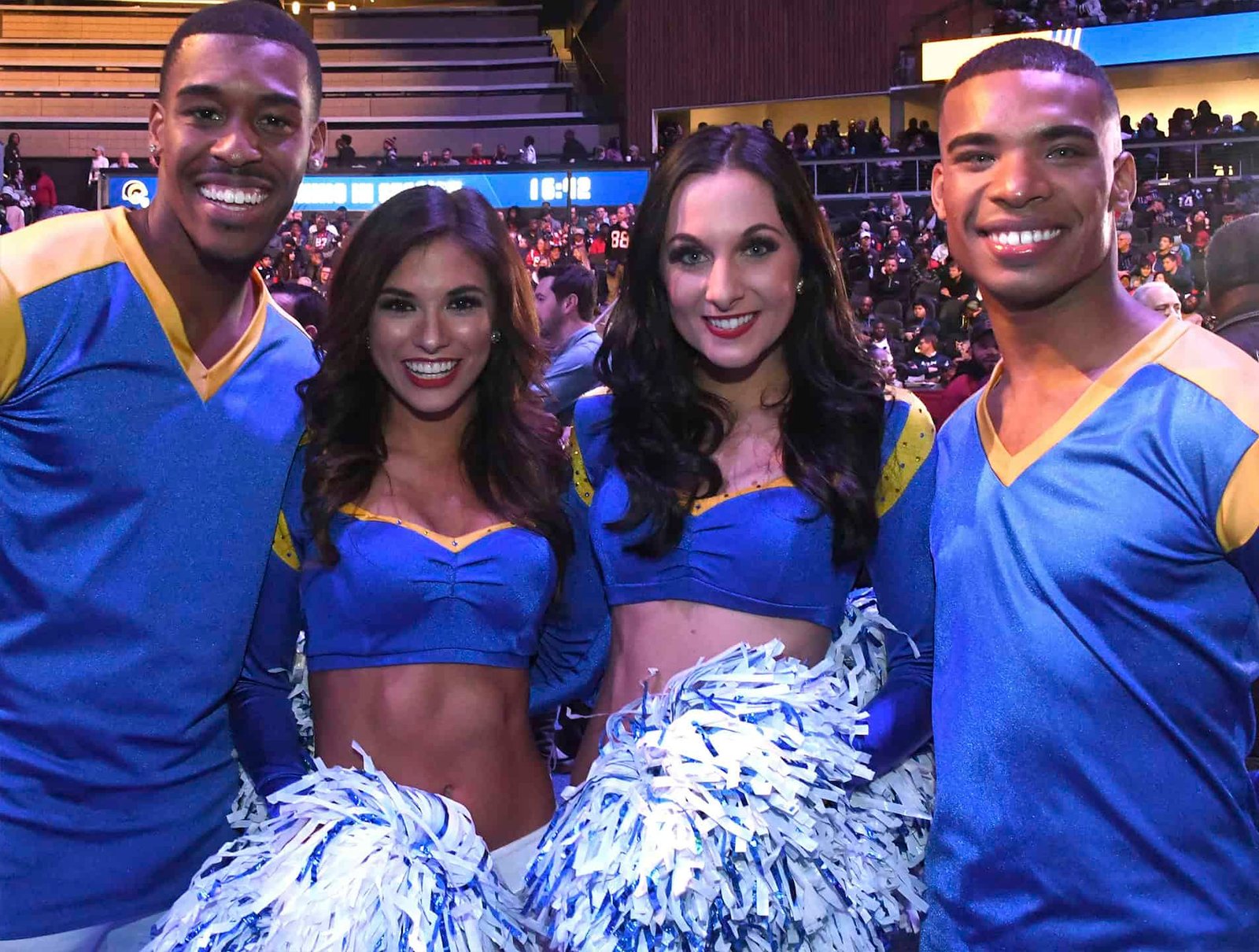
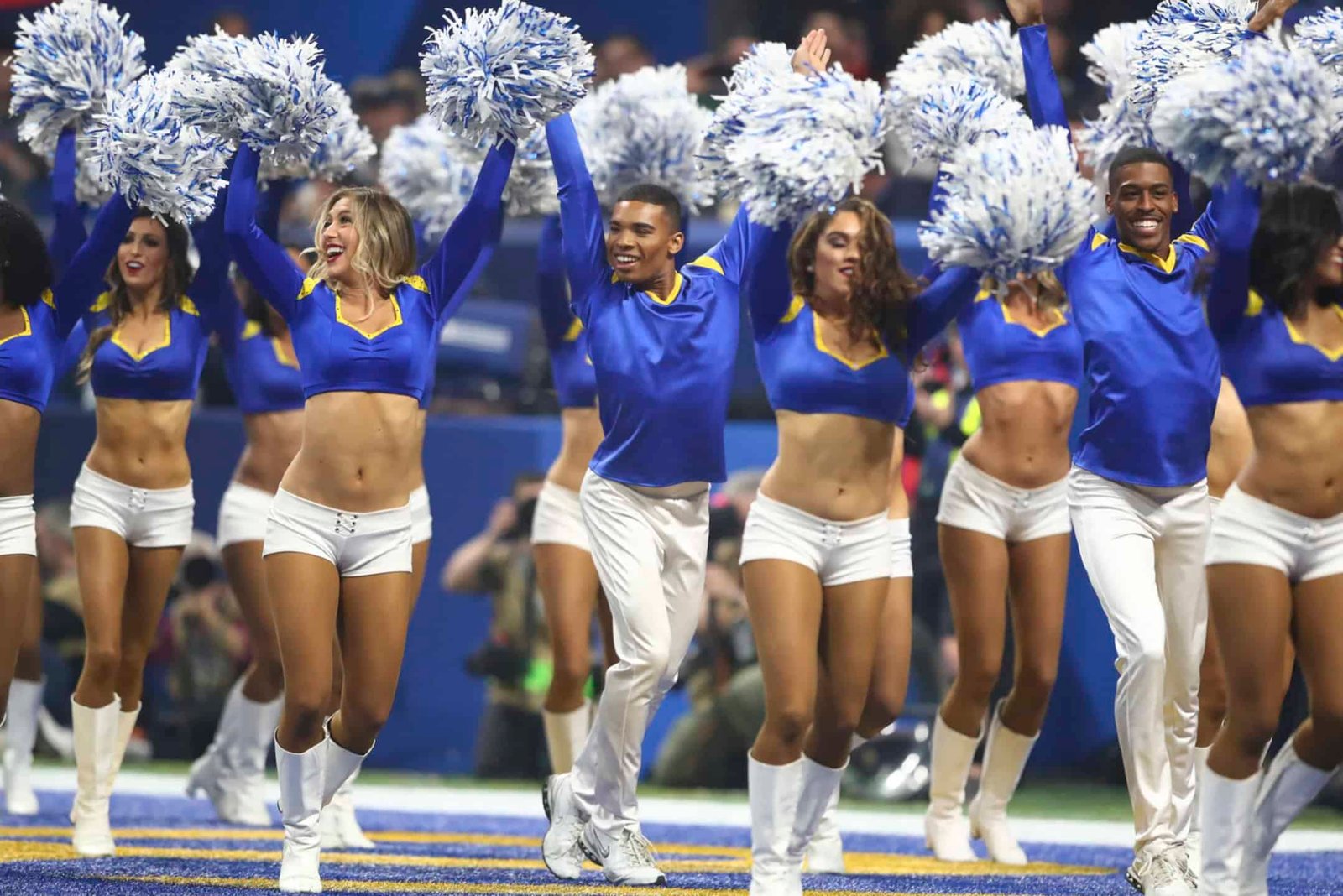
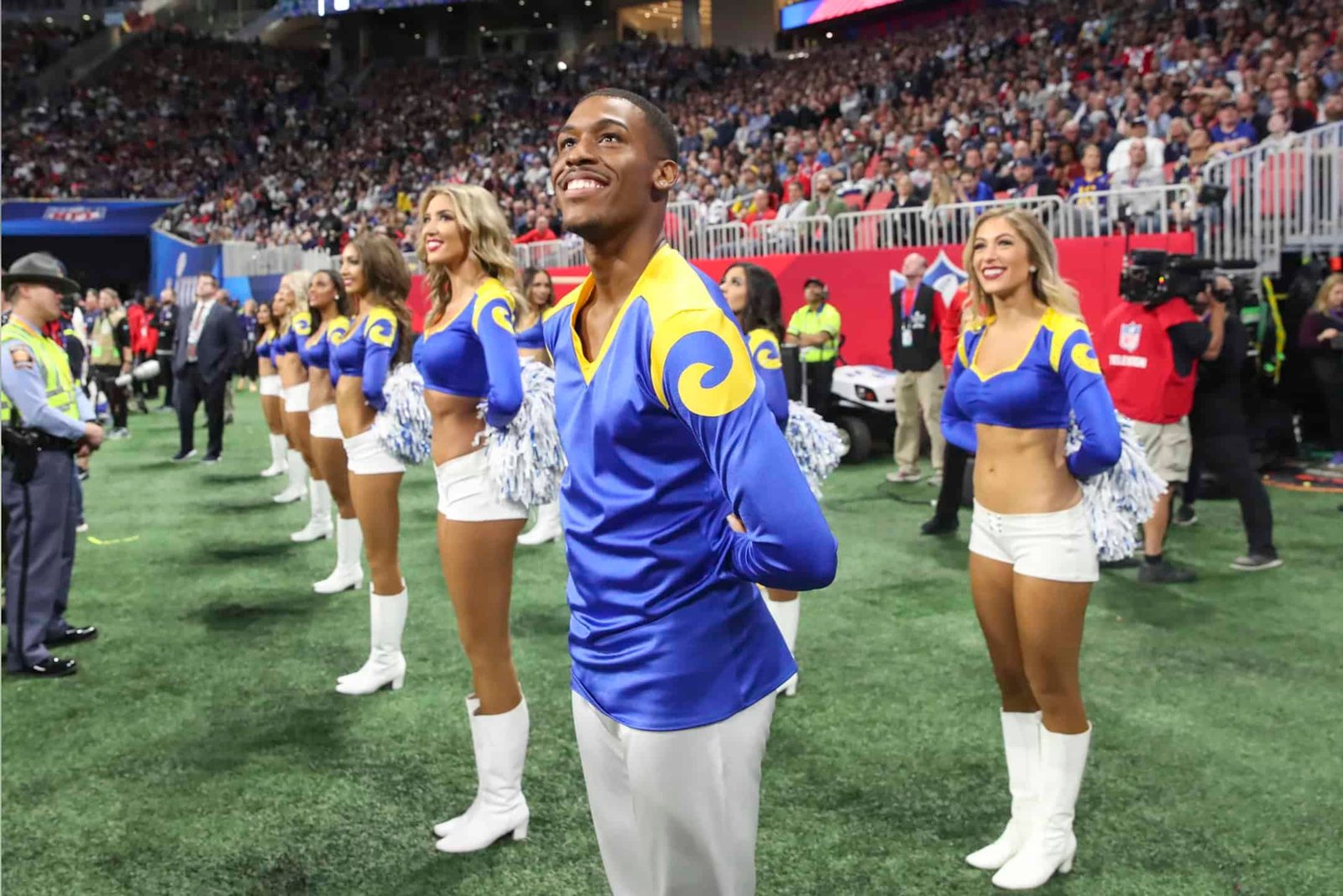
The big professional breakthrough came in 2018, when the Los Angeles Rams put Quinton Peron and Napoleon Jinnies on the squad. No male had ever tried out for the Rams cheer squad in the franchise’s 80-plus years, though auditions had never technically specified gender. A few men had registered, Rams cheer director Keely Fimbres told USA Today, but never showed. The Los Angeles Rams made NFL history as Quinton and Napoleon would go on to be the first male cheerleaders at the Super Bowl in 2019.
Now, male cheerleaders are thriving at every level, from college nationals to the NFL sidelines to the Olympic stage. In fact, 12 NFL teams will have male cheerleaders this season, five more than in 2024.